


Collection: Domaine Lafouge
“The domaine has, yet again, produced some excellent wines. It is a common refrain that it’s impossible to find good value Burgundy but given the modest prices for which the Lafouge wines sell, it’s immediately clear that is simply not true.”
Allen Meadows, Burghound, Issue 95.
“One of my favourite insider domaines in Burgundy. That these wines age beautifully, I can personally testify, having enjoyed a lovely 1969 Auxey-Duresses 1er Cru ‘La Chapelle”.
William Kelley, Wine Advocate
Gilles was raised at the heart of a long-established, almost ancestral family of winegrowers. In 1986, following formal wine studies and national service, he returned to the domaine to work alongside his father, Jean, and set about a quiet but important shift: bottling wines at the estate. Over time, Gilles has become a highly regarded and widely respected winemaker in his own right.
Although Gilles officially took full control of the domaine in 1990, his father has remained a familiar presence, very much in keeping with Burgundian tradition. The next generation is already emerging, with Gilles’ son Maxime now working part-time at the estate.
The village of Auxey sits at the entrance to a valley on the western side of Meursault and was historically linked to the Abbaye de Cluny during the Middle Ages. While the appellation lacks the renown of neighbours such as Volnay, Pommard, and Meursault, it consistently produces high-quality red and white wines. The Bourdon hillside, with its south-east exposure, is well suited to Pinot Noir, while Chardonnay performs particularly well on the lighter soils of Mont Mélian.
The domaine’s vineyards cover around 10 hectares across Auxey-Duresses, offering the Lafouge family a broad range of terroirs to interpret and refine.
In the cellar, Gilles follows a restrained, largely hands-off philosophy. Fermentations rely on indigenous yeasts, with élevage carried out primarily in older barrels, complemented by a measured proportion of new oak. Wines mature in a combination of demi-muids and traditional Burgundy barrels, with premier cru cuvées seeing up to 40–50% new oak. The red wines are lighter in extraction than in the past, with less punching down, and depending on the vintage, between 50% and 100% of the fruit is destemmed.
Today, the domaine extends to 12 hectares, centred on Auxey-Duresses with strong old-vine and premier cru holdings, alongside small parcels in Meursault and an old-vine site in Pommard 1er Cru “Les Chanlins.” Maxime is now joined by his son Gilles, representing the fifth generation, and the estate is widely regarded as being at the peak of its quality.
The vineyards are farmed organically, though without certification, and all fruit is harvested by hand—still uncommon in Auxey. While full destemming was once the norm, recent vintages, including 2022, have incorporated a small proportion of whole clusters to bring added freshness in warmer years.
Vinifications are carried out with wild yeasts, and the wines age predominantly in older barriques, with limited new oak—up to 25% for certain premier cru wines. Élevage lasts around 12 months, and the wines are bottled unfined and unfiltered, though the whites may receive light filtration when necessary.
-
Domaine Lafouge Auxey-Duresses Blanc 1er Cru 'Les Duresses' 2022
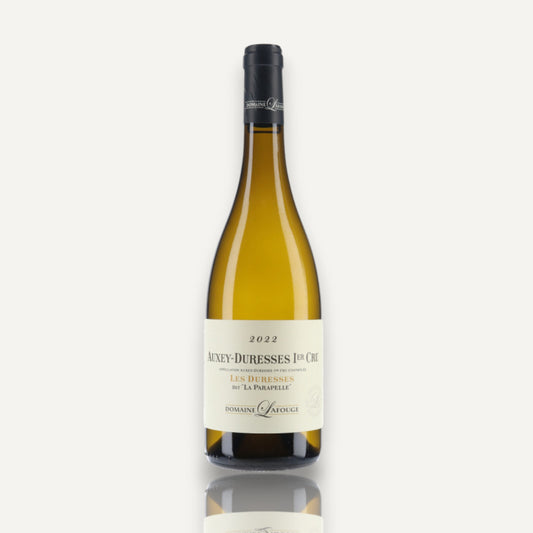
Domaine Lafouge Auxey-Duresses Blanc 1er Cru 'Les Duresses' 2022
90-92 BH “Sweet-Spot Outstanding” [Allen Meadows, 01/06/2024] “A deft application of wood is present on the cool and...Quick view- Regular price
- $159.00
- Sale price
- $159.00
- Regular price
-
-
Domaine Lafouge Auxey-Duresses Rouge 1er Cru 'Les Duresses' 2022
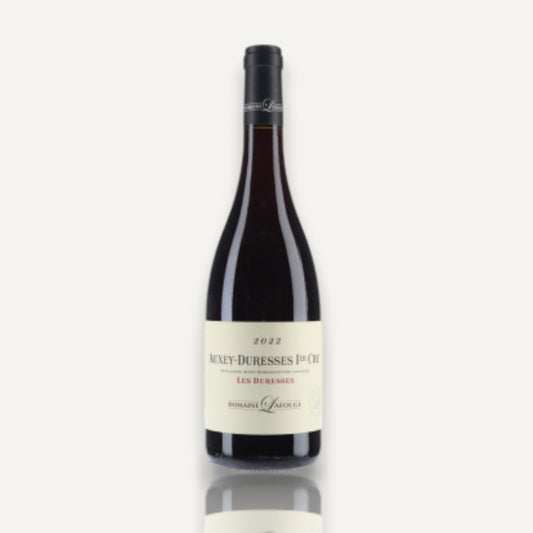
Domaine Lafouge Auxey-Duresses Rouge 1er Cru 'Les Duresses' 2022
92 BH. “Sweet-Spot Outstanding”. [Allen Meadows, 01/04/2024] “From a 1.6 ha holding in both Les and Bas Duresses. He...Quick view- Regular price
- $149.00
- Sale price
- $149.00
- Regular price
-
-
Domaine Lafouge Auxey-Duresses Rouge 1er Cru 'Les Ecusseaux' 2022
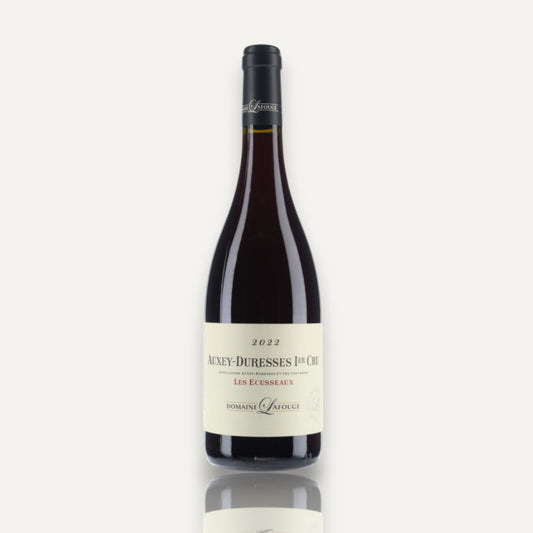
Domaine Lafouge Auxey-Duresses Rouge 1er Cru 'Les Ecusseaux' 2022
90 BH. “Outstanding”. [Allen Meadows, 01/04/2024] A very pinot-like nose is more elegant and relatively high-toned wi...Quick view- Regular price
- $149.00
- Sale price
- $149.00
- Regular price
-
-
Domaine Lafouge Auxey-Duresses Rouge 1er Cru 'Climat du Val' 2022
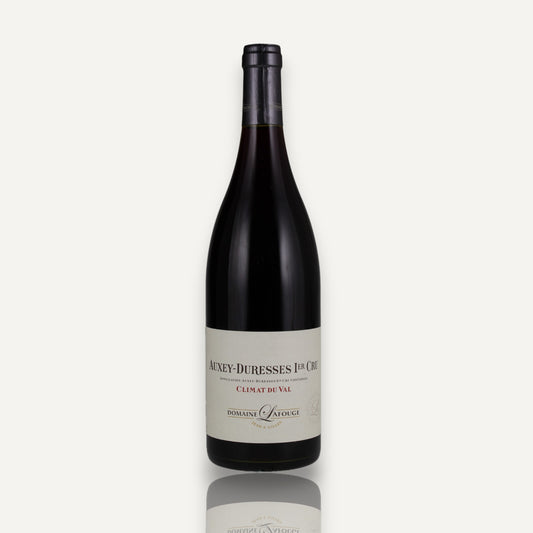
Domaine Lafouge Auxey-Duresses Rouge 1er Cru 'Climat du Val' 2022
92 BH. “Sweet-Spot Outstanding”. [Allen Meadows, 01/04/2024] “Ripe yet very fresh aromas of black cherry, kirsch and...Quick view- Regular price
- $149.00
- Sale price
- $149.00
- Regular price
-
-
Domaine Lafouge Auxey-Duresses Rouge 1er Cru 'La Chapelle' 2022
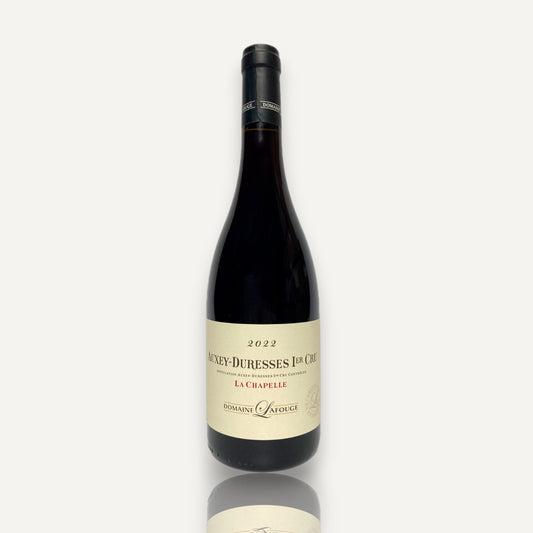
Domaine Lafouge Auxey-Duresses Rouge 1er Cru 'La Chapelle' 2022
92 BH. “Sweet-Spot Outstanding”. [Allen Meadows, 01/04/2024] “The domaine is only one of two owners. A wonderfully el...Quick view- Regular price
- $149.00
- Sale price
- $149.00
- Regular price
-
-
Domaine Lafouge Pommard 1er Cru 'Les Chanlins' 2022
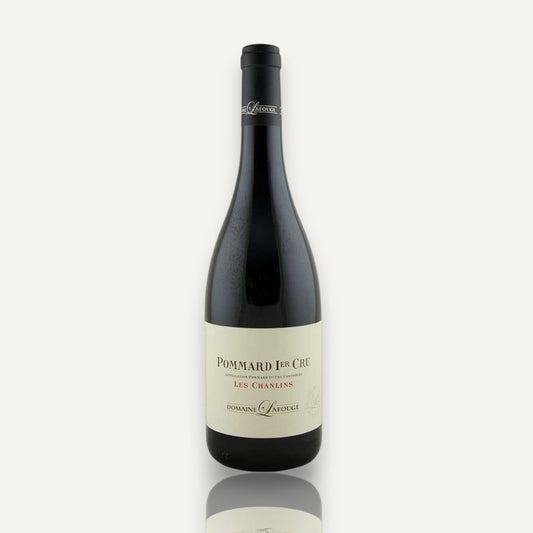
Domaine Lafouge Pommard 1er Cru 'Les Chanlins' 2022
92 BH. “Sweet-Spot Outstanding”. [Allen Meadows, 01/04/2024] A slightly riper yet again cool, airy and elegant nose ...Quick view- Regular price
- $249.00
- Sale price
- $249.00
- Regular price
-
-
Domaine de la Fessardière Muscadet 'La Mer'- Loire Valley, Fr 2023
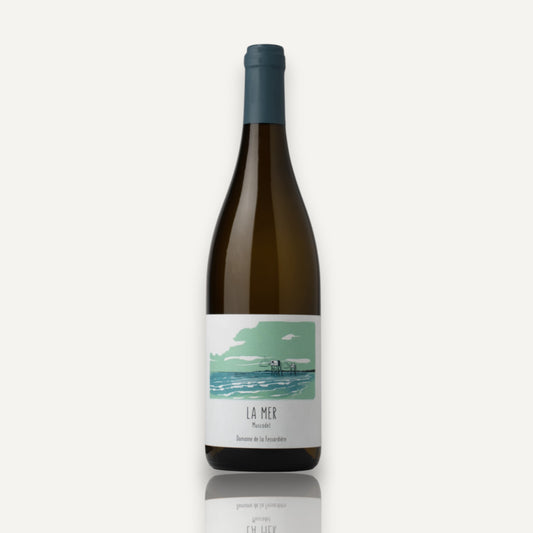
Domaine de la Fessardière Muscadet 'La Mer'- Loire Valley, Fr 2023
Fresh, precise and beautifully saline, La Mer is a classic, ocean-influenced Muscadet with real energy and finesse. C...Quick view- Regular price
- $45.00
- Sale price
- $45.00
- Regular price
-
-
Jean-Michel Dupré, Beaujolais-Villages ‘Pur Granite’ - Burgundy, Fr 2024
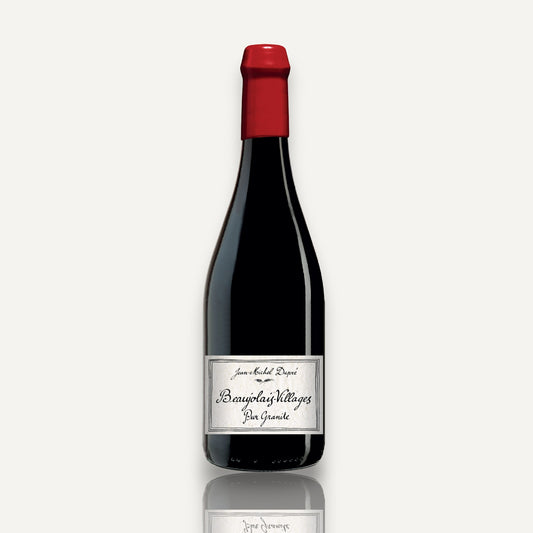
Jean-Michel Dupré, Beaujolais-Villages ‘Pur Granite’ - Burgundy, Fr 2024
Bright yet grounded, Pur Granite is a beautifully expressive Beaujolais-Villages with depth, lift and mineral drive. ...Quick view- Regular price
- $44.00
- Sale price
- $44.00
- Regular price
-
