


Collection: Cascina delle Monache

ABOUT
The namesake Cascina delle Monache already appears at the turn of the twentieth century in the local land register. It was built as a farmstead and lodging house to host travellers on their way to the coast along the Via Marenca (“the road that leads to the sea”), which was established during the Roman Empire to allow people, troops, and trade caravans to move freely between inland Italy and the Ligurian coastline, particularly the port of Genova.
After the Second World War, the property was revitalised by Carlo ‘Carlin’ and Rosangela ‘Gilli’ Arecco. The couple, from a farming background, lived on the property, cultivating vegetables, grains, and fodder, and breeding farm animals. In 1978, Carlin planted the first Cortese vines, just four years after the creation of the Gavi DOC, with the aim of producing wine for the farmstead’s use and for sale on the local market.
The second generation, siblings Giovanni and Roberta, were not particularly interested in continuing the family business and preferred to pursue careers in the industrial towns of the region. Giovanni’s wife, Anna, however, turned her focus to farm life during the 1990s, tending to the vines and selling grapes primarily to the local Gavi cooperative, active since 1951.
The renaissance of Cascina delle Monache came when Tiziano Arecco, son of Giovanni and Anna, decided to embrace the family heritage. After studying viticulture and oenology in Asti and Udine, he gained experience through harvests in New Zealand and California. Upon returning home, he focused on revitalising the vineyards under the ethos of biodiversity. Together with his sister Greta, who oversees logistics and hospitality, Tiziano now leads the estate in both the vineyards and the winery.
His inaugural vintage was 2018, released to the market in 2020.
THE ESTATE
Cascina delle Monache is situated in Nebbioli, within the municipality of Gavi. Although located in the south-eastern portion of Piemonte, the property lies closer to the Ligurian coast than Barolo or Barbaresco. The winery and its vineyards sit on a hill at around 320 metres above sea level, with four hectares under vine, planted mostly to Cortese, with a small parcel of Dolcetto.
The soils here, in the heart of the Gavi appellation, share a geological kinship with those of the Langhe. They are composed mainly of Cessola marls of younger Langhian origin and older Serravallian sands, very shallow, white-grey in appearance, and notably alkaline, with a pH between 7.5 and 8.5.
Tiziano and the Arecco family practise sustainable viticulture, focusing on the ecological balance and biodiversity of their environment through cover cropping, reforestation, and the encouragement of native flora and insects. Harvesting is carried out entirely by hand, and all grapes are vinified on site. The distinctive labels of Cascina delle Monache feature linoleum prints created by local artist Alice Baiardi.
GAVI
The terroir of Gavi was first recognised DOC status in 1974, mostly due to the relentless work of the Soldati family, who owns the iconic La Scolca estate (founded in 1919) and the Cantina dei Produttori del Gavi, the local consortium active since 1951. A few historical estates also contributed to the DOCG recognition in 1998: La Meirana estate of the Broglia family (est. 1972) and Villa Sparina of the Moccagatta family (est. 1970).
Today, the Gavi DOCG appellation encompasses 11 communes in the province of Alessandria, with the commune of Gavi at the heart of the terroir, spanning North to South, from the hills of Monferrato to the Ligurian Sea. Only the indigenous variety Cortese is cultivated over 1,550 hectares to produce 14 million bottles per annum, of which about 85% is reserved for the international market.
The terroir’s long history, cultural relevance and the geographical and geological proximity to the sea and the stunning Langhe area contributed to the Gavi fame of ‘great white wine of Piemonte’.
Nestled within tradition and modernity and strong of 180 associates of the consortium, today Gavi represents one of the most exciting Italian viticultural realities in the international panorama, alongside Soave Classico, Verdicchio dei Castelli di Jesi and Etna Bianco.
-
Cascina delle Monache ’Sori della Monaca’ Gavi di Gavi - Piedmont, It 2024

Cascina delle Monache ’Sori della Monaca’ Gavi di Gavi - Piedmont, It 2024
The first wine crafted back in 2018, Sorì della Monaca comes from a single, sun-exposed vineyard in the heart of Gavi...Quick view- Regular price
- $48.00
- Sale price
- $48.00
- Regular price
-
-
Cascina delle Monache ‘Ronco del Mandorlo’ Gavi di Gavi - Piedmont, It 2024
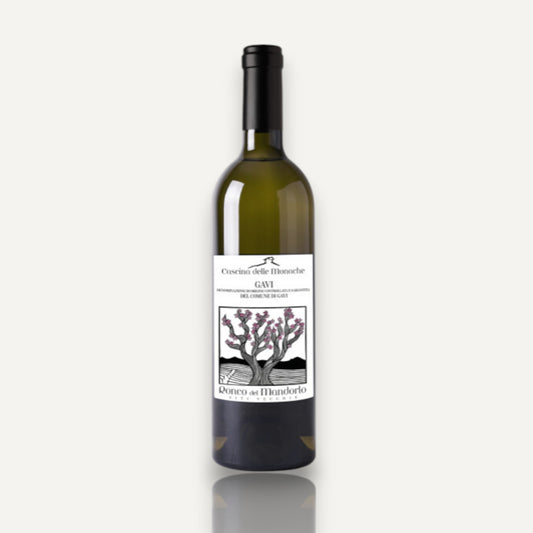
Cascina delle Monache ‘Ronco del Mandorlo’ Gavi di Gavi - Piedmont, It 2024
From the Arecco family’s oldest vineyard, planted in 1978, Ronco del Mandorlo is a pure expression of Cortese from Ga...Quick view- Regular price
- $69.00
- Sale price
- $69.00
- Regular price
-
-
Fletcher ‘C24’ Langhe Chardonnay - Piedmont, It 2024
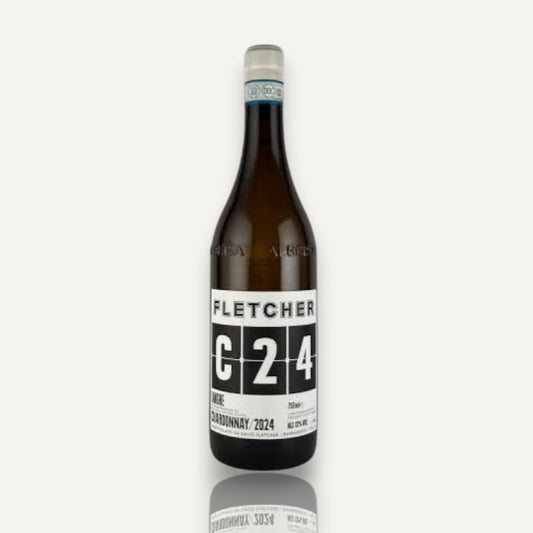
Fletcher ‘C24’ Langhe Chardonnay - Piedmont, It 2024
A distinctive expression of Langhe Chardonnay, shaped by cool north-facing sites and a clear focus on natural freshne...Quick view- Regular price
- $72.00
- Sale price
- $72.00
- Regular price
-
-
Cascina delle Monache ‘Bricco della Lodra’ Dolcetto - Piedmont, It 2024
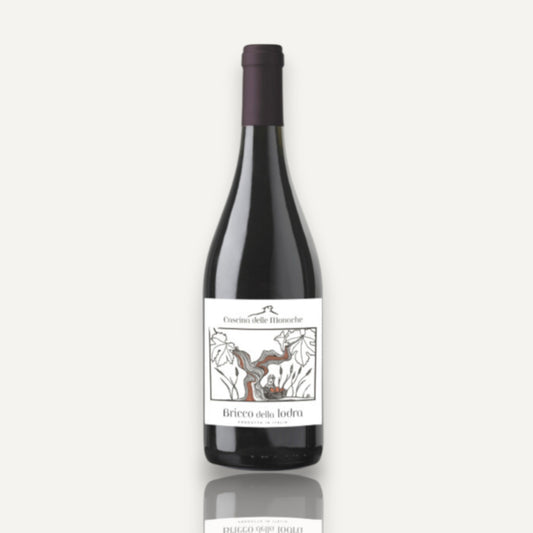
Cascina delle Monache ‘Bricco della Lodra’ Dolcetto - Piedmont, It 2024
From a single west-facing vineyard planted in 2016, Bricco della Lodra is made entirely from Dolcetto, one of Piedmon...Quick view- Regular price
- $54.00
- Sale price
- $54.00
- Regular price
-
-
Cantina della Stazione Barbera d’Alba - Piedmont, It 2024
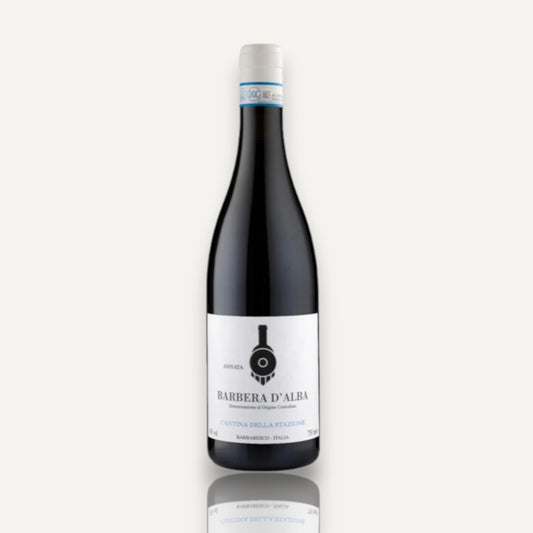
Cantina della Stazione Barbera d’Alba - Piedmont, It 2024
From the same 60-year-old vineyard in San Rocco, Alba as the Dolcetto, this Barbera comes from old, low-yielding clon...Quick view- Regular price
- $59.00
- Sale price
- $59.00
- Regular price
-

